The solution of self-sealing valves in US market
Background and Trends
Under the global context of greenhouse effect, protecting the Earth and preventing global warming, all people worldwide that use refrigerants have the obligation to prevent refrigerant leakage from damaging the ozone layer or exacerbating the greenhouse effect.
From 2016 and before, the refrigerant cans used in the US market all had piercing refrigerant caps (as shown in the picture below).
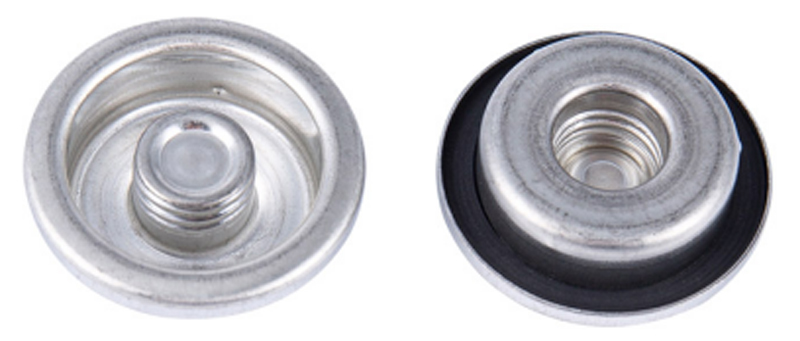
The major fault of this type of valve cap is that when the user doesn’t finish using it all at once, the refrigerant gas cannot be stored and will simply leak into the atmosphere, causing environmental pollution. Therefore, in 2016, the US EPA ruled that starting from 2017, self-sealing valves should be used to completely replace the outdated piercing valve caps. These self-sealing valves can be reused and perfectly solve the above problems. However, this regulation has put the refrigerant filling manufacturers in the United States in a difficult position, as there are no directly compatible valves available in the global market.
What are the market demands?
The valve of the small refrigerant cans in the United States, according to the American convention, use the 1/2’-16 acme thread. Since there are a large number of filling tools on the market that use this thread, the development of new valves should follow the market convention and not change the existing filling tools, so that they can be directly replaced from the piercing valve cap to the self-sealing valve.
Before this, our existing self-sealing valves all have the European standard thread of 7/16’-28. Therefore, we need to make a valve that uses the 1/2’-16 acme thread and is of the self-sealing style, to match with the changes in the US market.
 |
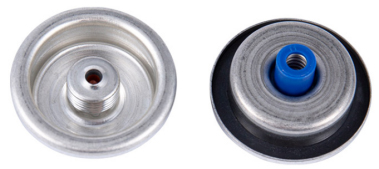 |
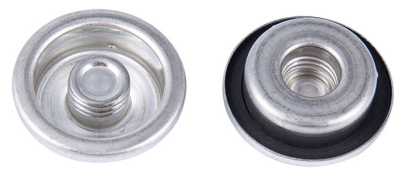
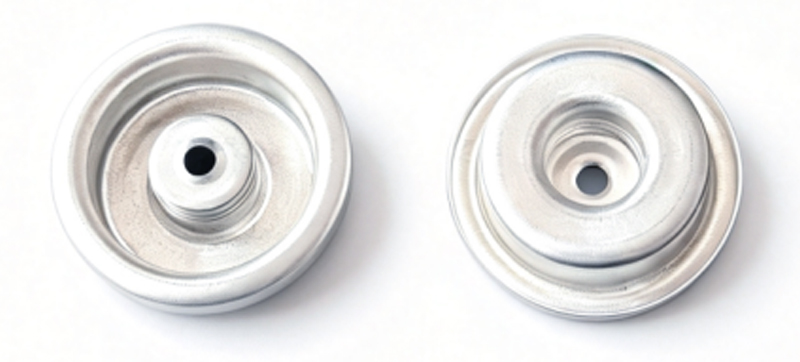
| piercing cap, thread: 1/2’-16 acme | Self-sealing valve, thread: 7/16’-28 |
Solution
- Manufacturing the valve mounting cup, with thethread of 1/2’ – 16 acme. Similar to the piercing cap, but with a hole in the middle of center.
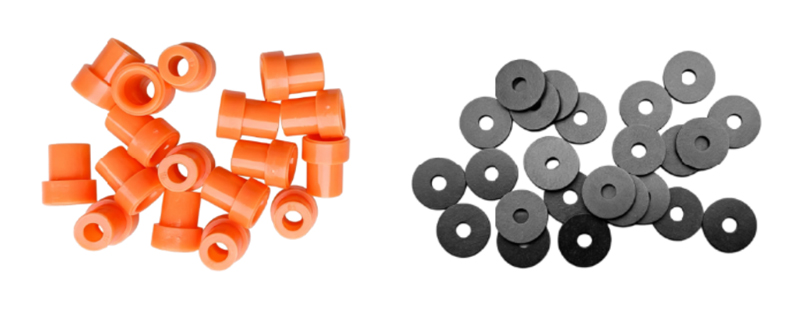
- Customize the matching valve housing and inner gasket based on the internal dimensions of the metal mounting cup.
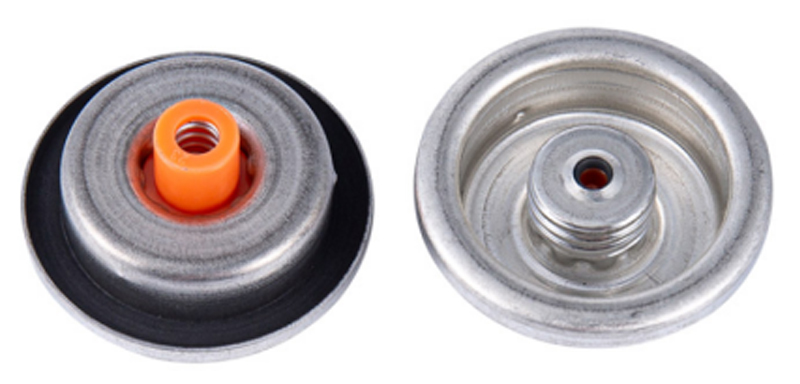
- Finally, they are assembled into a finished product – 1/2’ – 16 acmeself-sealing valve.
Customized designs
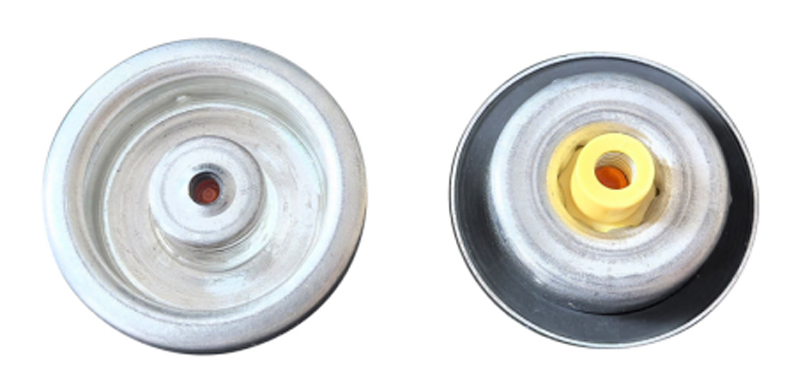
- In 2018, based on thedesign of 134a valve, we developed the 1234yf valve. The difference is that the 1234yf valve uses left-handed 1/2’-16 acme threads. And to distinguish easily, the valve housing was changed to yellow(orange color for 134a valve). 1234yf is the latest fourth-generation environmentally friendly refrigerant and will become the mainstream in the market in the future.
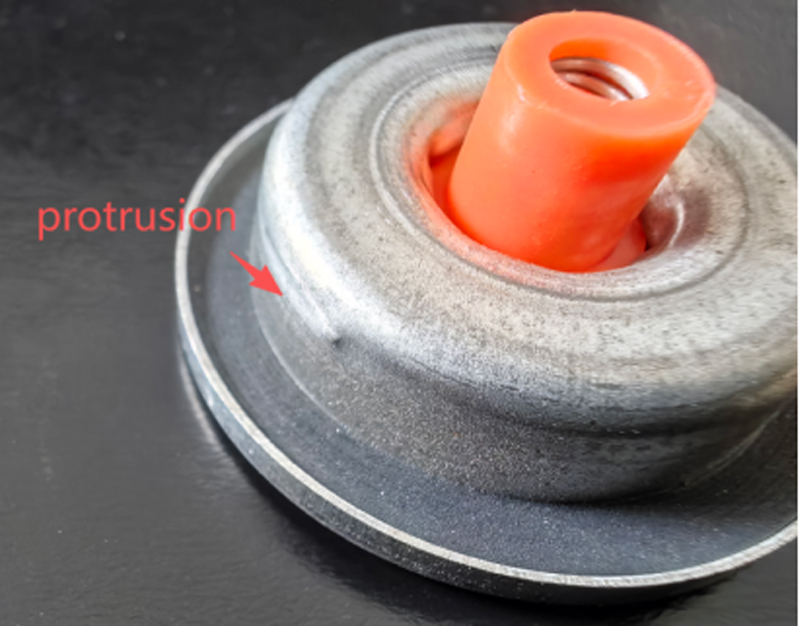
- The three protrusions were specially designed for a USfiller. The size and height of the protrusions were determined after repeated tests.
The purpose of the three protrusions is two:
— The automatic assembly line places the valve on the can mouth. When the can moves on the filling line, the protrusions can prevent the valve from falling off.
— This customer’s filling line is rather special. When extracting the vacuum in the bottle, three protrusions are needed to fix the valve to avoid being sucked away by the vacuum.
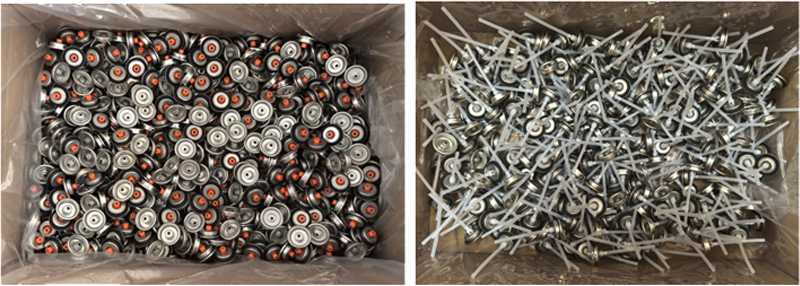
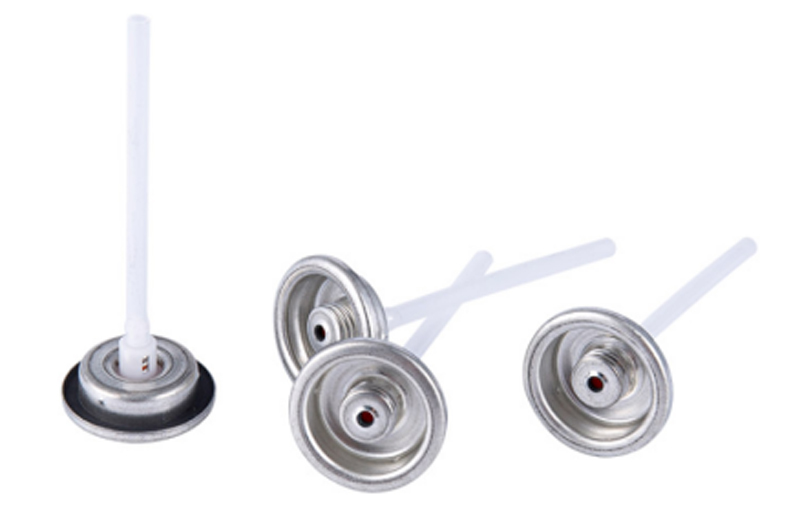
- AnotherUSfiller needed the self-sealing valve with a tube, due to changes in the filling line, but it was not for sucking liquids out, but merely to meet the need for feeding the valve on the production line.
This filler uses the same filling line to produce aerosol and refrigerant cans. The aerosol valve usually has a tube. This filling line needs the tube to guide the valve during assembly onto the can mouth. Therefore, we added a 3-inch tube to our self-sealing valve.
Status and Future
We have been supplying to the United States for over ten years. Several major brand manufacturers such as National, Johnson’s, and Blaster all use our valves. Every year, we supply over 20 million pcs to the US, and our market share in the US is 40-50%.
We can always adapt to market changes and introduce new products. We have also developed more valves suitable for various refrigerants. The 134a limit, the future growth of 1234yf, and the development of alternative refrigerants all provide us with business opportunities for growth.